Antelope Island: a visitor's guide
The largest island in the Great Salt Lake carries roughly 500 wild bison and sits 45 minutes from a downtown Salt Lake City hotel. Here is what nobody tells you before you go.
7 min read · updated · by Southwest Adventure Tours
What Antelope Island actually is
Twenty-eight thousand acres of grassland and rock sitting in a hypersaline lake, reached by a seven-mile causeway from Syracuse, Utah. It is a state park, not a wildlife reserve or a zoo, and it’s roughly 41 miles, 45 to 55 minutes, from downtown Salt Lake City.
The island was named by Frémont and Carson in 1845 for the pronghorn they found on it. The bison came later: twelve animals brought over by boat in 1893, from which the present herd of roughly 500 descends. Along with the herds at Yellowstone and a handful of other sites, it’s one of the genetically significant free-ranging bison populations left in North America.
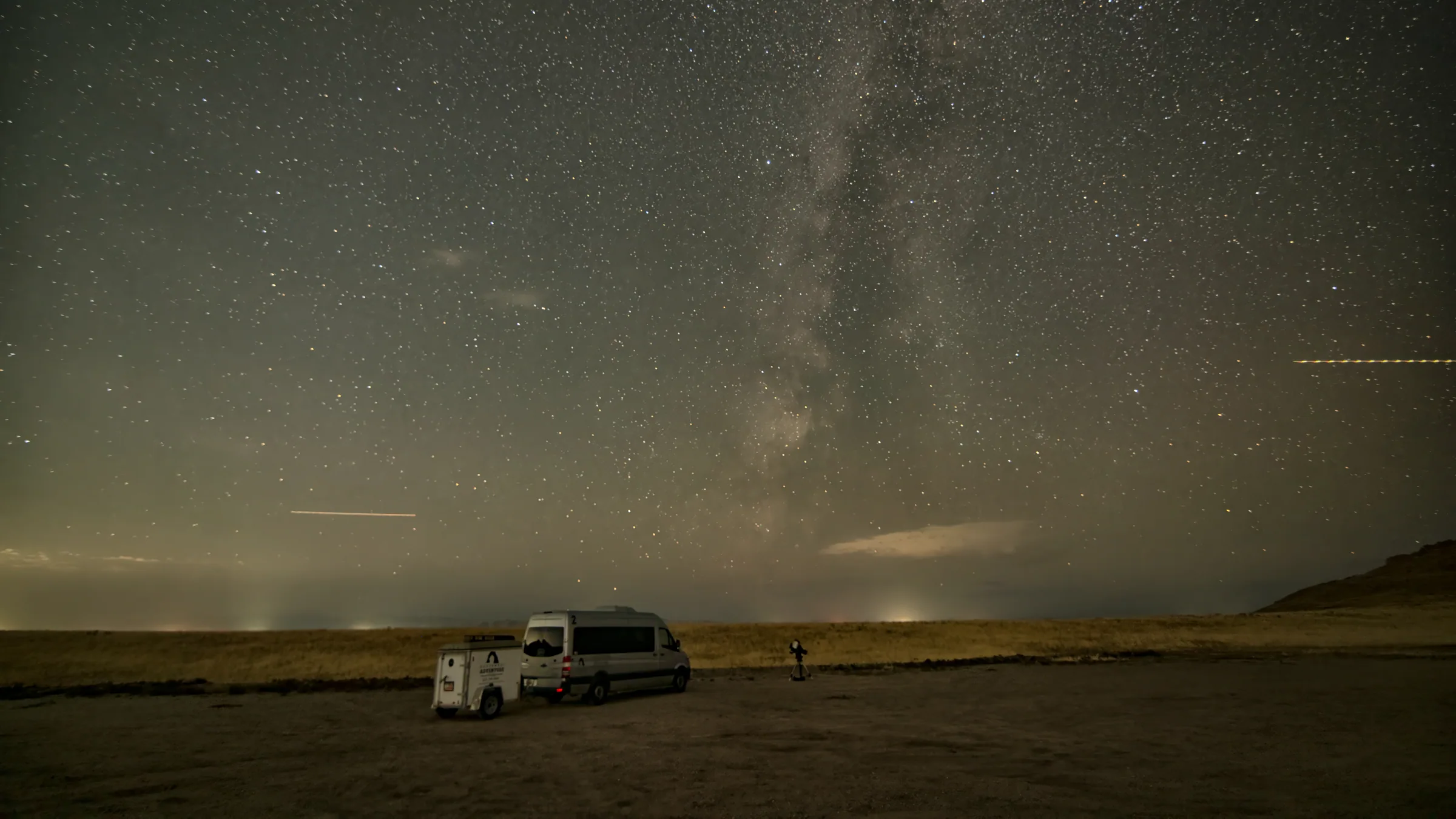
It is also a certified International Dark Sky Park, designated in 2017. Water on every side keeps the light domes of the Wasatch Front at a distance in a way nowhere else this close to a city manages.
The wildlife, and where you actually find it
Bison. Free-ranging across the whole island, so where they are is a matter of weather and grazing rather than a fixed location. The odds are best in the cooler months. Park rule is a 25-yard minimum and it exists for a reason: bulls weigh up to a ton and are considerably faster than they look. Nobody guarantees a sighting; in practice the great majority of visits get good views.
Pronghorn are common and are the second-fastest land animal on earth. Watching one run flat-out across open grassland is worth the trip on its own.
Bighorn sheep on the rockier ground, plus mule deer, coyotes and a lot of jackrabbits.
Birds are the real headline. The Great Salt Lake is a hemispheric migration stop used by something like twelve million birds a year. Eared grebes stage here in the hundreds of thousands in autumn; Wilson's phalaropes stop en route to South America; avocets, black-necked stilts and California gulls work the shallows through the season. Bring binoculars.
And what isn’t there: no fish. The lake is far too saline. The food web runs on brine shrimp and brine flies, which is precisely why the bird numbers are what they’re.
The best time to visit, and the two weeks to avoid
Spring (March–May) is the strongest all-round window: the island is green, which it’s not for most of the year, calves are on the ground, the wildflowers come in and the bird migration peaks.
The gnats. Biting gnats (no-see-ums) peak in a two-to-four week band around late May and early June. They are a nuisance rather than a hazard, and long sleeves plus repellent handles them, but if you’re sensitive to insects this is the fortnight to avoid.
Summer (June–August) is hot, bright and shadeless. The compensation is the evening: from May to mid-October the day tour switches to an afternoon-and-sunset itinerary with the Buffalo Point hike and sunset on Bridger Bay beach. In summer, that’s the version to take.
Autumn (September–October) is the connoisseur's season: gnats gone, light long and low, grebe migration at its peak.
The bison roundup, in late October, is a genuine spectacle: riders push the entire herd into corrals at the north end for health checks and herd management. It draws a crowd and the island gets busy. Worth planning for or around, depending on which you want.
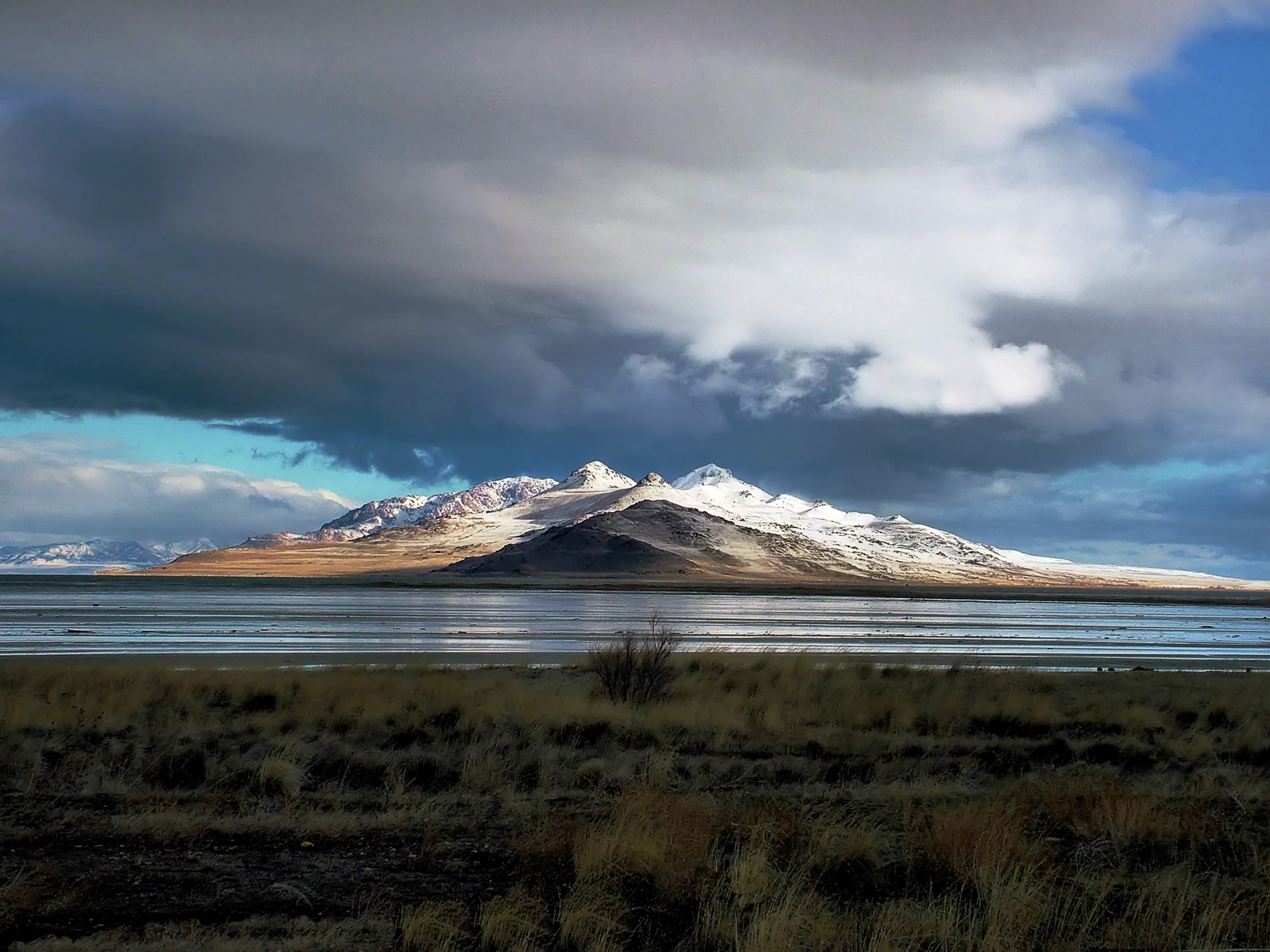
Winter (November–February) is quiet, cold, exposed and, for photographers, arguably the best. Snow on the Wasatch across the water, frost on the salt, almost nobody there, and the bison concentrated on the lower slopes where they’re easy to find.
Fielding Garr Ranch isn’t a filler stop
It is easy to read "historic ranch" on an itinerary and assume it’s padding. It isn’t.
The ranch house was built in 1848 and lived in continuously until 1981, which makes it the oldest Anglo-built house still standing on its original foundation in Utah. The bunkhouse, the blacksmith shop, the equipment sheds and the spring that made the whole operation viable are all still there and largely unrestored.
If you only have time for one stop on the island, make it this one. On the guided tour the ranch leg is scheduled at about two hours, most of which is the drive down the island with stops wherever the wildlife is, leaving 30 to 45 minutes at the ranch itself.
The lake itself: the part people get wrong
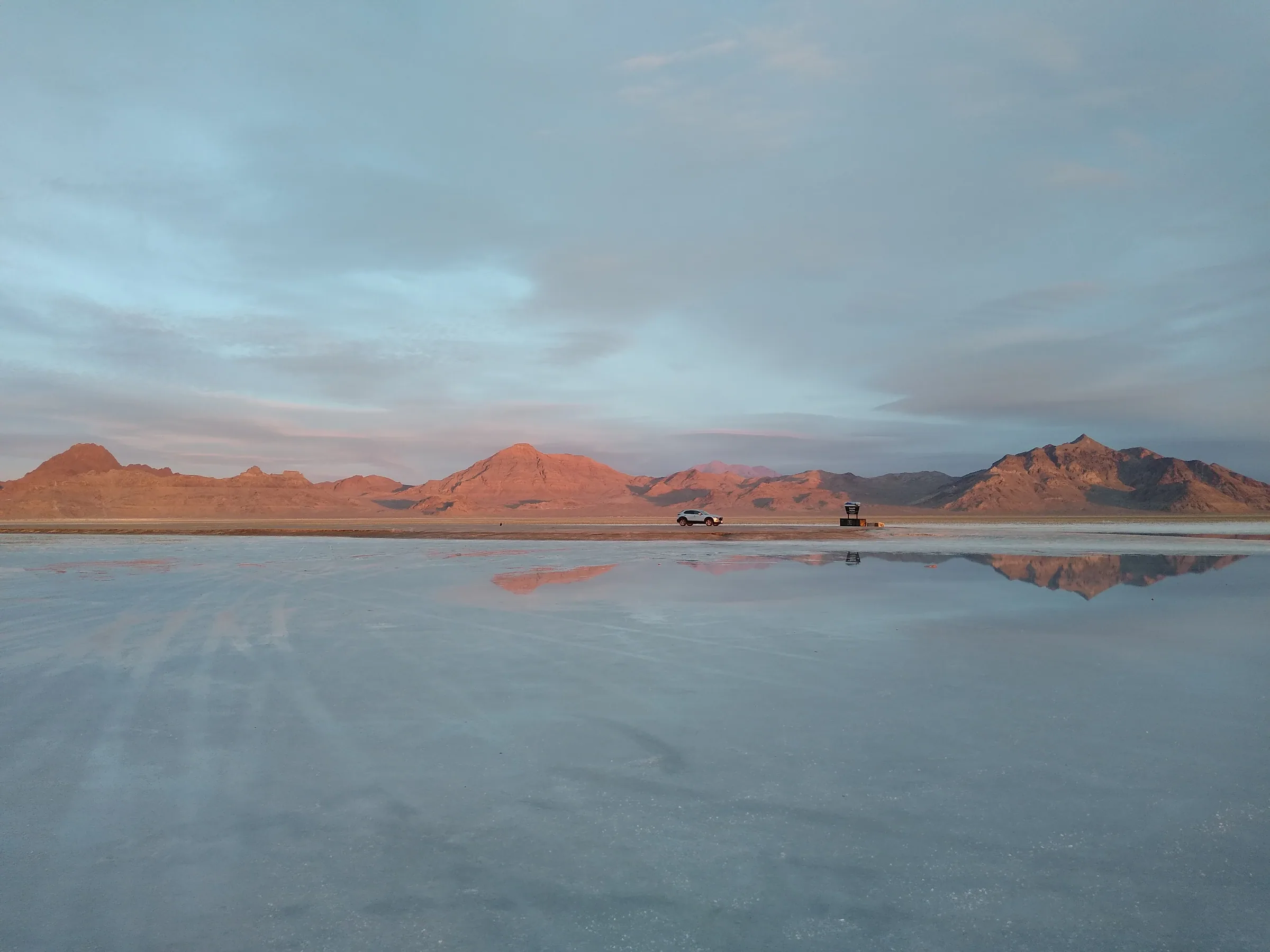
The Great Salt Lake is a terminal lake: water flows in and only leaves by evaporation, so everything dissolved in it stays. It is the last remnant of Ice Age Lake Bonneville, which covered a third of Utah and left the shoreline benches you can pick out on the mountains all around the valley. The Bonneville Salt Flats are the floor of the same vanished sea.
The pink water isn’t the water you’ll see. A railroad causeway built in the 1950s split the lake in two, and the northern arm, cut off from most freshwater inflow, is far more saline and runs pink from salt-loving *Halobacteria*. The southern arm, which is the water at Antelope Island, is less saline and reads blue-gray. If you’ve seen the famous pink photographs, adjust your expectations.
Yes, it sometimes smells, mostly in late summer on hot still days with an onshore breeze. It is bacteria breaking down organic matter in the shallows, it lasts a few minutes of your attention, and it’s essentially absent in winter and spring.
And yes, you float, but not on a day tour. The salt needs a freshwater rinse afterwards and the tour route has no shower on it. Look at the lake on the tour; float in it on your own time at a beach that has facilities.
Practical details
Entrance fee is charged per vehicle at the causeway gate. On a guided tour it’s already included in the fare.
No shade, anywhere. Sunscreen, brimmed hat, sunglasses, and more water than you think in every season.
Wind. There is nothing between the island and the Wasatch to slow it down. A windproof layer is worth carrying even in summer.
Buffalo Point is the standard hike: about a mile round trip, uphill, with the best view on the island at the top. It is included on the summer evening tour itinerary.
The causeway itself is worth paying attention to rather than driving through: seven miles at lake level with water on both sides and, in the right light, no visible horizon.
Two ways to visit. Self-drive is straightforward. It’s a well-signed state park. The guided day tour runs six hours with hotel pickup, a guide who knows where the herd has been that week, and a stop at the 1848 Fielding Garr Ranch. And the Dark Sky Experience goes out in the evening for the night sky instead.
Common questions
Are there really bison on Antelope Island?
Yes. A free-ranging herd of roughly 500 animals, descended from twelve brought to the island by boat in 1893. They aren’t fenced into a viewing area, so sightings depend on where they have been grazing. Odds are best in the cooler months.
How far is Antelope Island from Salt Lake City?
About 41 miles, or 45 to 55 minutes, from downtown, north on I-15 and then across a seven-mile causeway from Syracuse. It’s the closest wild country to the city.
When is the best time to visit Antelope Island?
Spring for green grass, calves and bird migration; autumn for the best light and the late-October bison roundup; winter for solitude and the most striking photography. Avoid the two-to-four week gnat peak around late May and early June if biting insects bother you.
Can you swim in the Great Salt Lake at Antelope Island?
You can float, since the salinity makes sinking difficult, but you need a freshwater rinse afterwards or the salt is punishing on skin, hair and clothing. Choose a beach with facilities, and note that guided day tours visit the shoreline for viewing rather than swimming.
Does the Great Salt Lake smell bad?
Sometimes, mildly, mostly on hot still days in late summer with an onshore breeze. It comes from bacteria breaking down organic matter in the shallows. Most visitors notice it briefly and then stop noticing. It is essentially absent in winter and spring.
Why is part of the Great Salt Lake pink?
A railroad causeway built in the 1950s split the lake into two arms. The northern arm receives far less freshwater inflow, is much more saline, and runs pink from salt-loving Halobacteria. The southern arm, the water at Antelope Island, is less saline and reads blue-gray, so you won’t see the pink from the island.
Is Antelope Island good for stargazing?
Very. It was certified as an International Dark Sky Park in 2017, and being surrounded by water keeps the Wasatch Front light domes at a distance. The Milky Way is visible to the naked eye from roughly April to October on a clear night when the moon is down or close to new.