Bryce or Arches: which national park day trip from Salt Lake City?
Both are thirteen-hour private days at the same price. They aren’t the same trip, and for a lot of visitors neither is the right call.
7 min read · updated · by Southwest Adventure Tours
The short answer
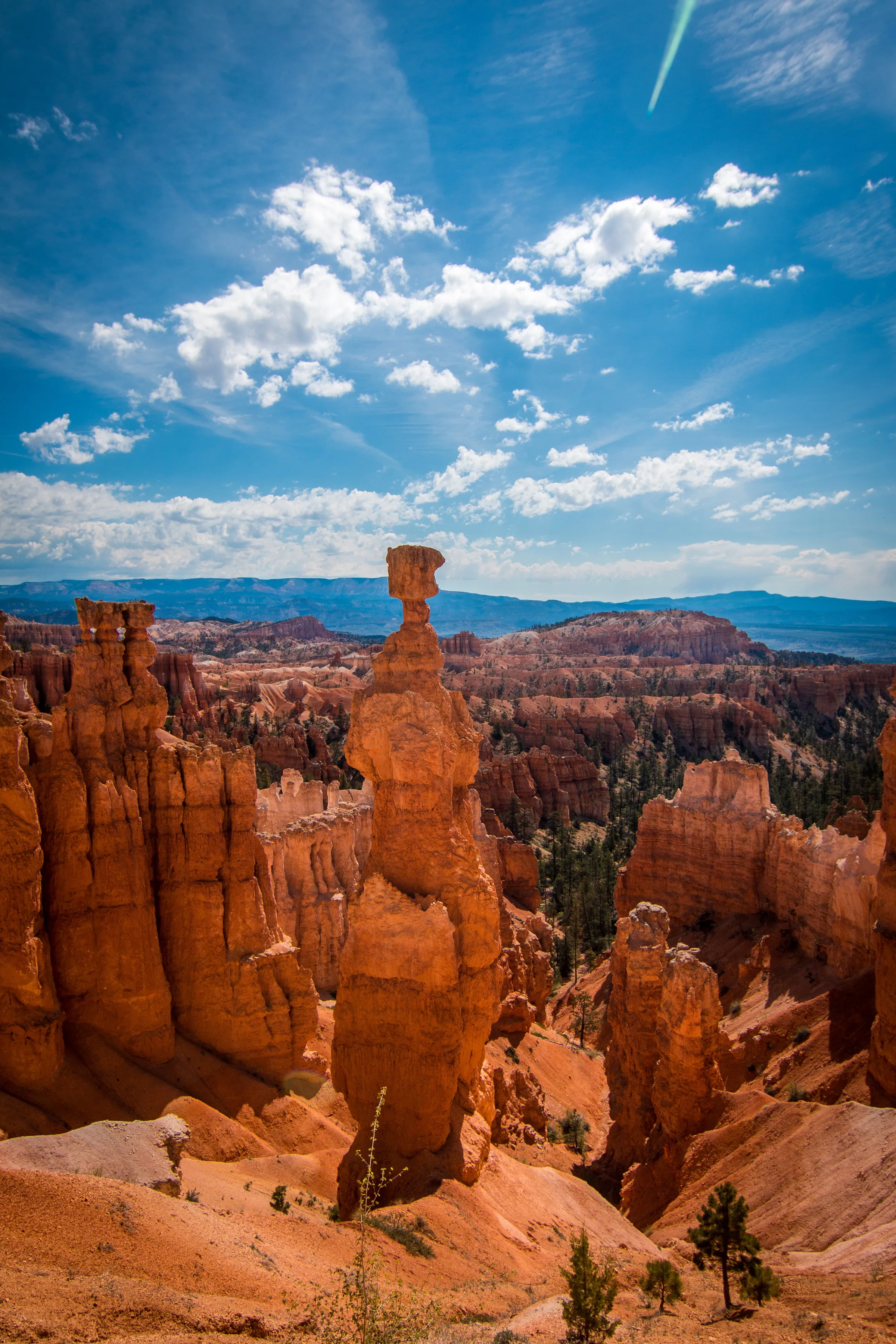
Bryce, if you’ve seen neither and want the landscape that will surprise you most. Hoodoo amphitheatres at 8,000 feet exist in this concentration nowhere else on earth, and the altitude keeps it comfortable when southern Utah is unbearable.
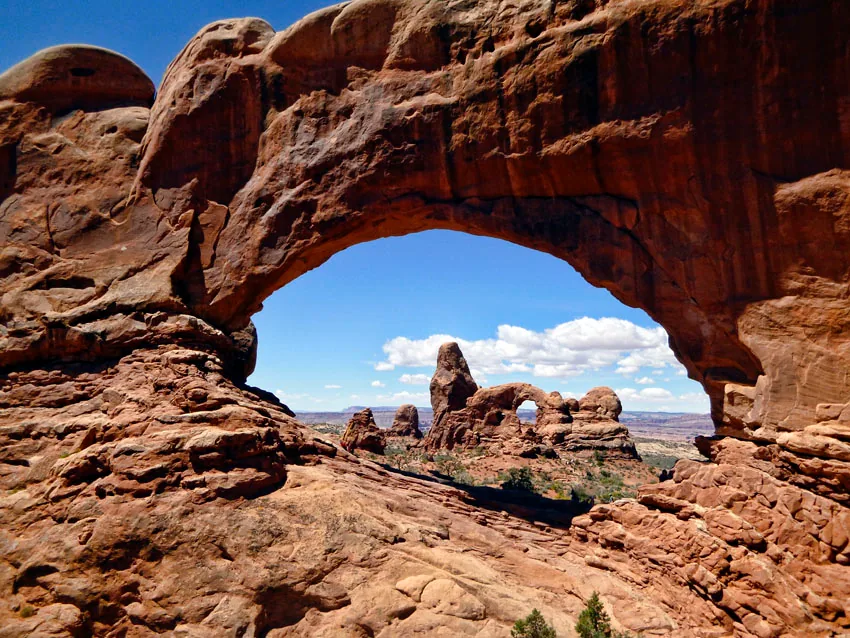
Arches, if you want the famous one, if you photograph landscapes conventionally, or if anyone in your party would rather look than walk. The Windows Section puts four large arches within a few hundred yards of a parking lot.
Neither, if you can spend two nights in southern Utah instead. Both parks are transformed by early and late light, and a day trip from Salt Lake City can only ever deliver the middle of the day. We would rather say that than sell you the wrong trip.
The numbers, side by side
Distance. Bryce is about 270 miles south of Salt Lake City, roughly four hours each way. Arches is about 230 miles south-east near Moab, roughly three and a half hours each way. Arches is marginally closer; the difference isn’t decisive.
Day length. Both run about thirteen hours door to door: Arches from 6:00 AM to about 7:00 PM, Bryce from around 6:00 AM to 6:30 PM.
Time actually in the park. Roughly five hours at Arches, roughly the same at Bryce. Both are private tours, so the shape of that time bends to your group.
Altitude. Bryce's rim runs 8,000 to 9,100 feet. Arches sits between about 4,000 and 5,600 feet. This drives everything about comfort, which is covered below.
Price. The same: a per-party rate rather than per person, which means both make financial sense for four to six people and poor sense for two.
Return route. Bryce comes back over Cedar Mountain on Scenic Byway 14, so you aren’t driving the same road twice. Arches returns the way it came. On a thirteen-hour day that’s a bigger deal than it sounds.
Heat is the deciding factor in summer
If you’re traveling between June and August, this isn’t a close call.
Arches in high summer is dangerous, not just uncomfortable. Air temperatures run past 100°F, slickrock surface temperatures go far higher, and there’s no shade and no water on any trail. People are rescued off the Delicate Arch trail every summer. A good guide restructures the day around short walks and will decline an afternoon Delicate Arch attempt, but the whole day is spent managing heat.
Bryce in high summer is pleasant. The rim sits nearly 4,000 feet higher and daytime highs run in the 70s and 80s while Moab is at 105°F. The altitude is the air conditioning.
The one summer caveat at Bryce: afternoon thunderstorms are a real feature of the Colorado Plateau monsoon in July and August, and lightning on an exposed rim is taken seriously. Your guide will move you off it.
In spring and autumn the calculation flips back to preference. Both are excellent in April–May and September–October, which is also when both are busiest.
What you actually see
At Arches: Park Avenue, a canyon of vertical sandstone fins standing like a street of buildings. Balanced Rock, 3,600 tons on an eroding pedestal. The Windows Section (North and South Window, Turret Arch, Double Arch), which is the highest concentration of large arches reachable on short walks anywhere in the park. Delicate Arch, either as a three-mile round-trip hike with 480 feet of climb across open slickrock, or from the viewpoints on a much shorter walk. And, time allowing, Landscape Arch out in Devils Garden, which spans over 290 feet and is the longest in North America.
At Bryce: Red Canyon on the approach, where the road passes through arches cut in red limestone. Fairyland Point, usually the quietest. Sunrise and Sunset Points, connected by a half-mile paved rim trail with the entire Bryce Amphitheatre dropping away beside you and Thor's Hammer visible below. Bryce Point for the widest view. And, if your group is up for it, the Navajo Loop or Queen's Garden trails, which drop below the rim and put you underneath the hoodoos: the best part of the day, at the cost of a 500-foot climb back out at altitude.
The difference in one sentence: Arches asks you to look at individual objects; Bryce asks you to look into a space full of thousands of them.
For photographers
Arches photographs more conventionally and more successfully in the middle of the day, because the shapes are strong enough to survive flat light. Use the shadows inside Park Avenue and the Windows as structure, shoot through arches rather than at them, put a person in frame for scale, and use a telephoto to compress the La Sal Mountains in behind. That’s the frame that separates a real Arches photograph from a postcard.
Bryce is harder from a day tour. The amphitheatre faces east, so the light is dramatic at dawn and merely adequate at noon. The workaround is to go *down*: among the hoodoos on the Navajo Loop, orange light bounced off orange rock gives you a glow that doesn’t exist from the rim. Wall Street, a slot between 200-foot walls with Douglas firs reaching for the daylight, works in any light and is the best frame on either tour.
Both want a polarizer and both punish you for changing lenses outdoors. Fine dust, red at Arches and pale at Bryce, gets into everything.
If photography is the actual point of your trip, stay overnight in southern Utah. This is the section of this guide we most want you to take seriously.
When the answer is neither
A one-day national park run from Salt Lake City costs you seven to eight hours in a vehicle. That’s a fair trade when your schedule has no other shape: a single free day bolted onto a conference, a layover, a family visit. It is a poor trade when you have alternatives.
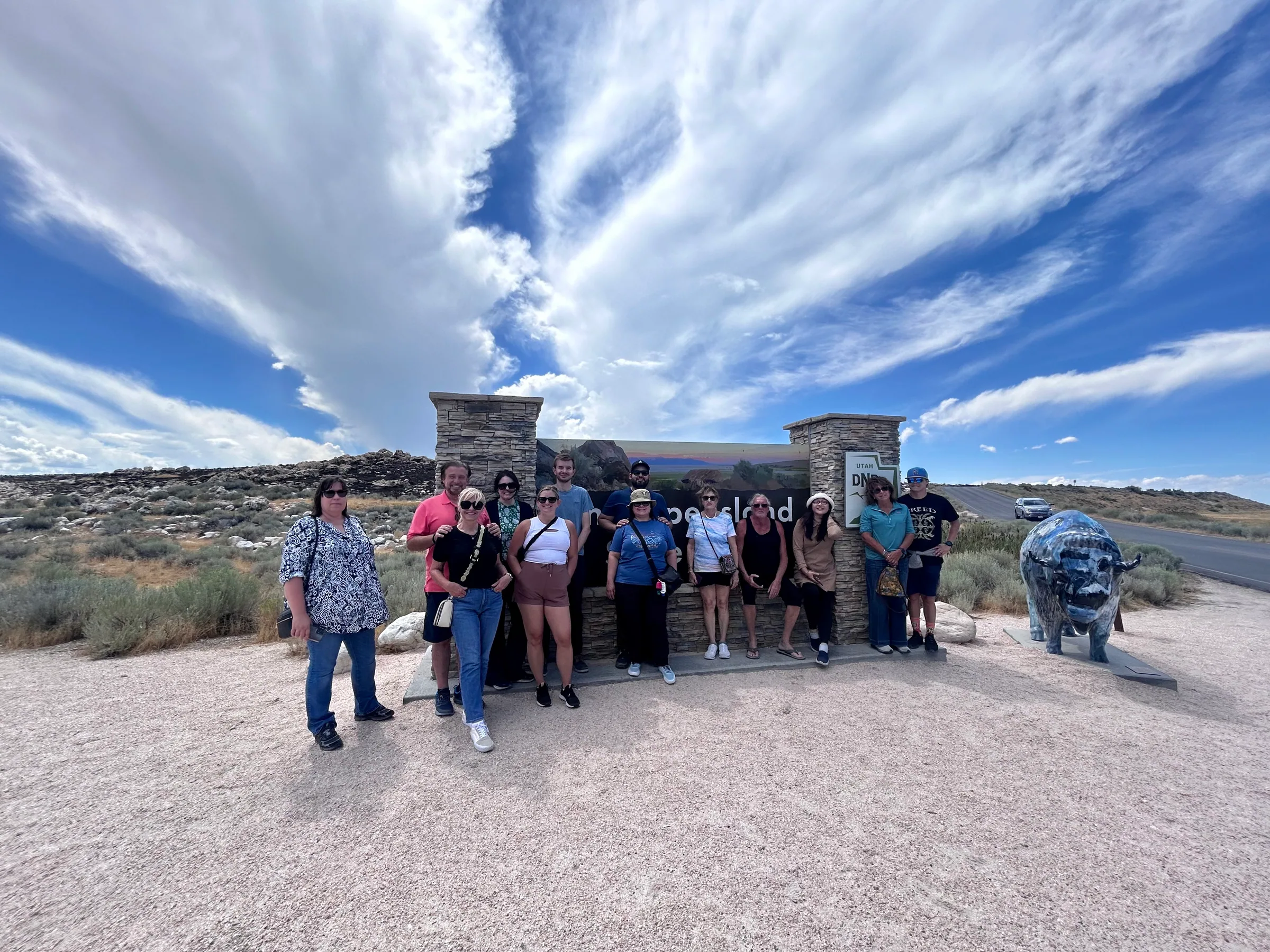
If you have one free day and want a landscape, the Great Salt Lake and Antelope Island tour gives you a hypersaline inland sea with a free-ranging bison herd on it, six hours door to door, forty-five minutes from your hotel. The Bonneville Salt Flats give you something that doesn’t look like earth for the same six hours.
If you have two or three days, drive to Moab or to Bryce, stay the night, and see the parks at dawn and dusk. Every guide who runs these day tours would give you that advice, and we would rather you had a better trip than a booking.
If you’re set on one park in one day, both work, both are properly run, and everything you need to decide is above. Full detail on the Bryce Canyon day tour and the Arches National Park day tour.
Common questions
Can you do Bryce Canyon as a day trip from Salt Lake City?
Yes, as a private thirteen-hour day: roughly four hours each way, about five hours in the park, returning by a different route over Cedar Mountain on Scenic Byway 14. It is a long day and it works. If your trip allows an overnight in southern Utah instead, that’s the better option, because Bryce at dawn and dusk is a different place from Bryce at midday.
Is Arches or Bryce better as a day trip?
Bryce, for most first-time visitors. The hoodoo amphitheatres are unlike anywhere else on earth and the 8,000-foot altitude keeps it comfortable in summer. Arches is the more famous landscape, photographs more conventionally, and has more big features reachable on short walks, which suits parties with limited walking. In June to August, choose Bryce: Arches routinely exceeds 100°F with no shade.
How far is Arches National Park from Salt Lake City?
About 230 miles south-east, near Moab, roughly three and a half hours each way via I-15, US-6 over Soldier Summit and US-191. A one-day guided trip runs 6:00 AM to about 7:00 PM.
How far is Bryce Canyon from Salt Lake City?
About 270 miles south, roughly four hours each way via I-15, SR-20 and SR-12 through Red Canyon. A one-day guided trip runs about thirteen hours and returns by Scenic Byway 14 over Cedar Mountain, so you see different country in each direction.
Do I need a timed-entry reservation for Arches?
The National Park Service has run a timed-entry system at Arches during peak months in recent years, with dates set annually. On a guided tour the guide handles it, which is one reason the day starts at 6:00 AM, which puts you inside the park ahead of both the crowds and the entry window.
How hard is the hike to Delicate Arch?
A three-mile round trip with about 480 feet of climbing across open slickrock, with no shade and no water. It isn’t technical, but it’s not casual either, and there’s real exposure on the final stretch. In high summer it’s a poor idea in the afternoon. The lower and upper viewpoints give you the arch on a far shorter walk.