The best time to visit the Bonneville Salt Flats
The single most useful thing to know about the salt flats is that they’re underwater for half the year, and that the flooded version might be the better one.
6 min read · updated · by Southwest Adventure Tours
There are two salt flats, and nobody tells you which one you’re booking
Photographs of the Bonneville Salt Flats fall into two categories and they look like different places, because they’re taken in different seasons.
Dry salt. A hard white crust cracked into hexagonal plates, stretching to a mountain range forty miles away. This is late June through September. You can walk far out onto it, drive the speedway access road, and stand somewhere that doesn’t look like earth.
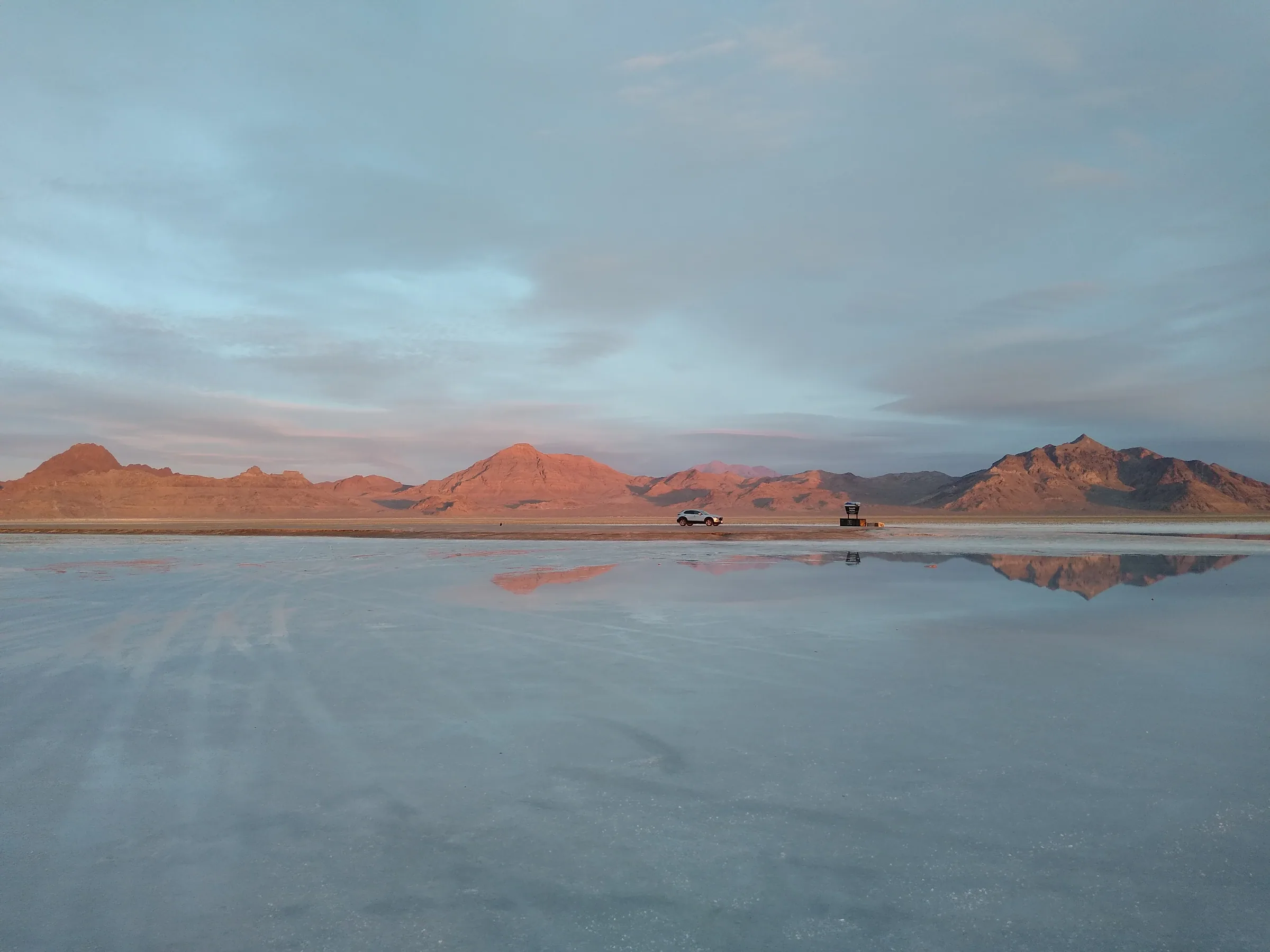
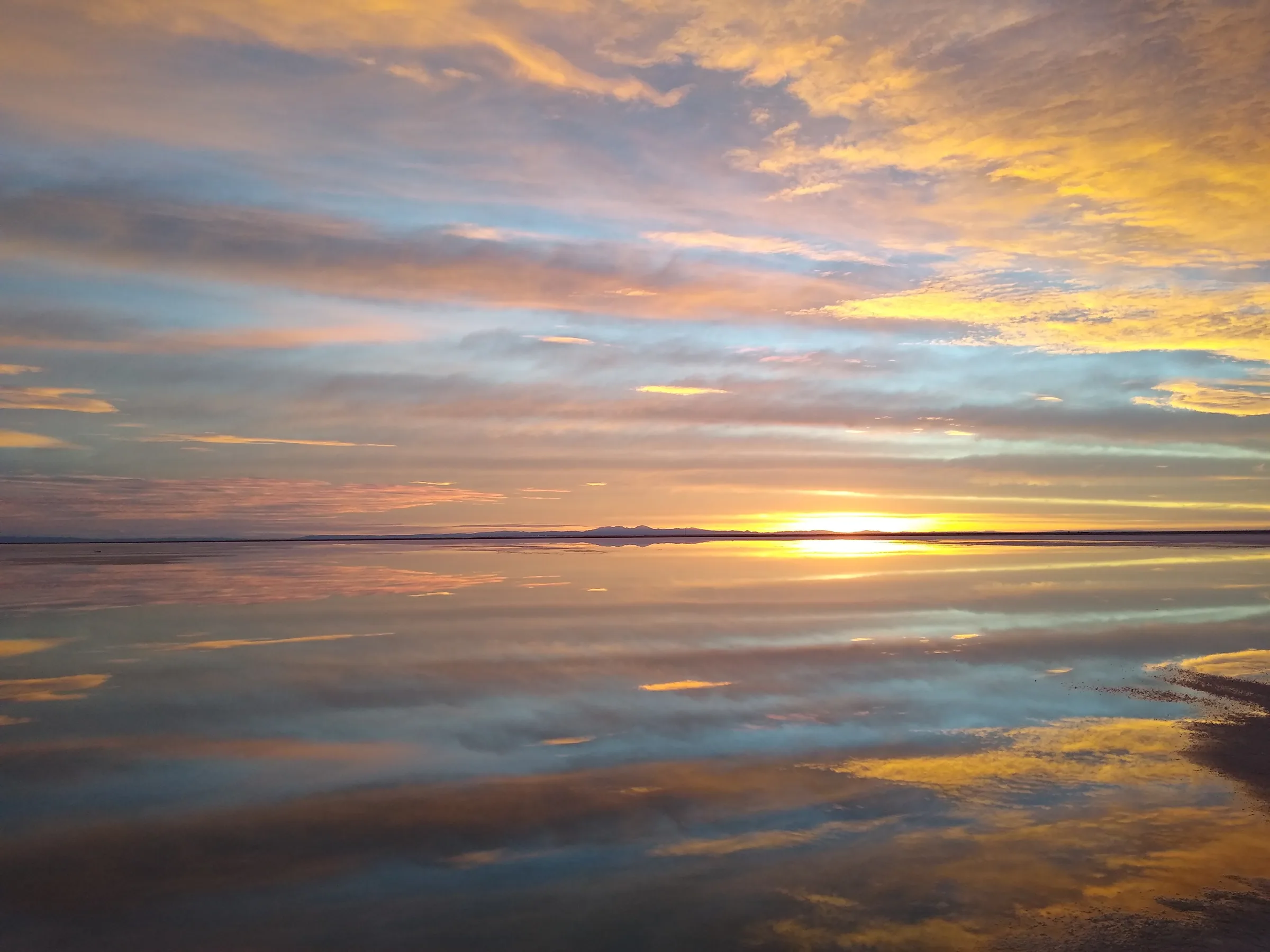
Wet salt. A mirror. From roughly October through May a shallow layer of standing water sits on the crust, usually an inch or two, and because the surface is one of the flattest natural places on the planet it reflects the sky perfectly. The mountains double. The clouds double. People walking on it appear to be walking on nothing.
Most visitors arrive expecting the first and get whichever the calendar gave them. Both are worth the trip. But they aren’t interchangeable, and if you have a specific photograph in your head you should book the right months for it.
Month by month
January–February. Fully flooded, often windy, and the drive out on I-80 can be affected by snow. Cold, empty and dramatic. The mirror is at its most reliable. Bring waterproof boots and accept wet feet.
March–April. Peak mirror season and, for photographers, the best window of the year. Water still standing, weather warming, storm clouds building over the Silver Island Mountains. This is when the salt flats photograph best and almost nobody comes.
May. Transitional. The water is receding and you may get a mix: damp crust at the edges, standing water further out. Pleasant temperatures. A good compromise month.
June. The crust is drying. By late June it’s usually walkable. Temperatures climbing fast.
July–August. Dry, hard, blazing white, and very hot, routinely over 100°F with zero shade. Speed Week runs in mid-August on the Bonneville Speedway and is a genuine spectacle if you have any interest in cars, though it also means the course itself is in use. Book the afternoon tour departure in these months; it puts you on the salt in better light and cooler air.
September. The best all-round month. Dry salt, tolerable heat, low crowds, and the light already lengthening. If you want one recommendation for the classic salt-flats experience, this is it.
October. Still usually dry early in the month, then the water starts to return. Quiet and pleasant.
November–December. Flooding again, cold, short days. The tour shifts its afternoon departure earlier, 1:30 PM rather than 3:00 PM, to get you back before dark.
Time of day matters as much as time of year
A white plain under a vertical midday sun is the least interesting version of this place: no shadows, no texture in the salt polygons, and a glare that hurts.
Late afternoon into golden hour is when the salt flats come alive. Low, raking light picks out the hexagonal cracking in dry season and turns the standing water gold in wet season. This is why the afternoon departure exists and why photographers ask for it by name.
Sunrise is arguably better still and isn’t practical on a day tour from Salt Lake City. The drive is an hour and forty minutes each way. If sunrise on the salt flats is your ambition, stay in Wendover.
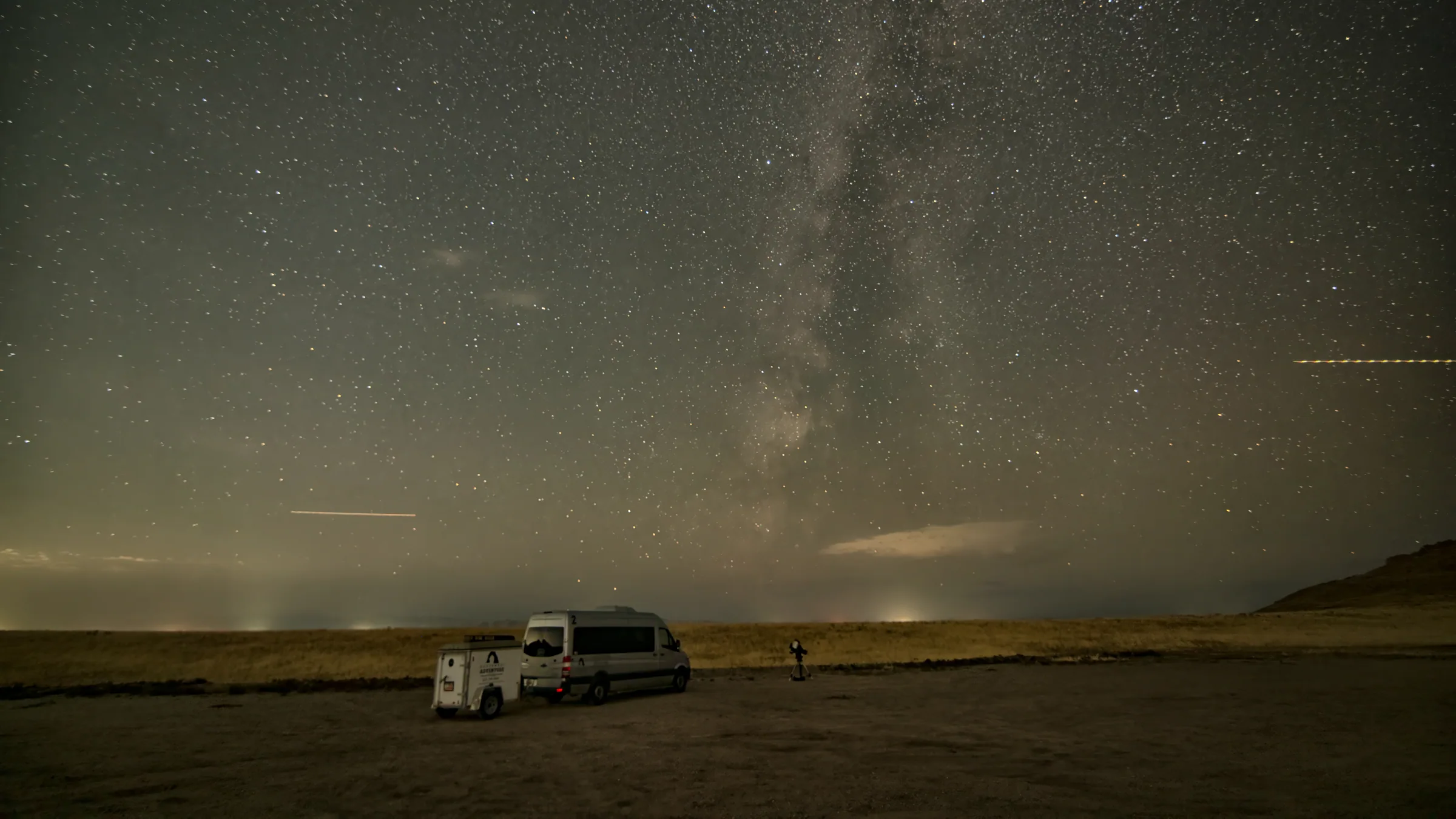
Night. The salt flats have some of the darkest skies in the continental United States and the Milky Way over a white plain is extraordinary. That isn’t part of the day tour either, but the Antelope Island Dark Sky Experience delivers a comparable sky forty-five minutes from downtown Salt Lake City.
Speed Week and the racing calendar
The Bonneville Salt Flats have been the world's land-speed venue since the 1910s. Ab Jenkins set endurance records here in the 1930s; Sir Malcolm Campbell brought Bluebird; Craig Breedlove pushed past 600 mph on this salt in the 1960s.
Speed Week, run by the Southern California Timing Association, is the big meet and falls in mid-August. There are further events through the late summer and autumn: World of Speed and World Finals among them.
Two caveats. First, the meets are salt-dependent: if the crust is thin or wet, events are shortened or canceled outright, and this has happened in several recent years. Second, during a meet the speedway itself is in use, which changes where you can walk.
If seeing racing is the point of your trip, tell us your dates when you ask about the Bonneville Salt Flats tour and we’ll tell you whether they line up rather than let you find out at the fence.
What to bring, whichever season
The darkest sunglasses you own. This isn’t optional. A white surface under a Utah sky throws back an enormous amount of light and people leave with sore eyes.
Sunscreen, applied under your chin and nose too. You burn from below out here, which catches nearly everybody.
Footwear you don’t love. The salt is corrosive. It crusts white on leather and attacks stitching. Waterproof boots in wet season, old closed shoes in dry.
More water than seems reasonable, a brimmed hat, and a windproof layer. There is nothing to break the wind for forty miles.
For cameras: expose +1 to +2 stops or your salt will render gray; bring a polarizer; bring a long lens for the compression shots, which are better than the wide ones; and change lenses inside the vehicle, because fine salt dust plus a bare sensor is how expensive cameras die.
Getting there from Salt Lake City
The salt flats are about 120 miles due west of downtown Salt Lake City on I-80, just short of Wendover on the Nevada line. It is roughly an hour and forty minutes each way on a straight, fast, empty road.
Self-driving is entirely possible. There’s a signed rest area and a paved access road onto the speedway. Two things to know if you do: don’t drive onto wet salt, where vehicles get stuck and the salt destroys the underside, and there’s no fuel, water or shade for a long way in either direction.
The guided alternative is a six-hour small-group tour with hotel pickup that also stops at Great Salt Lake State Park and the Tree of Utah, and covers the geology and land-speed history on the drive out. Full detail on the Bonneville Salt Flats tour page.
Common questions
When is the best time of year to visit the Bonneville Salt Flats?
September for the classic dry salt experience: hard white crust, tolerable heat and low crowds. March and April for the mirror effect, when a thin layer of standing water turns the surface into a perfect reflection of the sky. Mid-August if you want to see land-speed racing at Speed Week. July and August are dry but very hot, with no shade at all.
Are the Bonneville Salt Flats flooded in winter?
Yes. From roughly October to May a shallow layer of water, usually an inch or two, sits on the salt crust, and it doesn’t dry out until early summer. You can still visit and walk on it with waterproof footwear, and many photographers prefer it: the flooded flats reflect the sky and mountains almost perfectly.
How far are the Bonneville Salt Flats from Salt Lake City?
About 120 miles west on I-80, near Wendover on the Nevada border, roughly an hour and forty minutes each way. A guided day tour runs six hours door to door including stops at Great Salt Lake State Park and the Tree of Utah sculpture.
When is Speed Week at Bonneville?
Mid-August, run by the Southern California Timing Association, with further meets through the late summer and autumn. All of them depend on salt conditions and have been shortened or canceled in recent years when the crust was poor, so check before planning a trip around one.
Can you drive on the Bonneville Salt Flats?
There is a paved access road onto the speedway area, and in dry season the crust supports vehicles in designated areas. Do not drive onto wet or soft salt: vehicles get stuck, recovery is expensive, and the salt is severely corrosive to anything underneath a car. On a guided tour this isn’t something you have to judge.
How hot does it get on the salt flats?
Over 100°F routinely in July and August, with no shade anywhere and a white surface reflecting heat back at you. Bring far more water than you think you need, dark sunglasses, sunscreen and a brimmed hat. The afternoon tour departure in these months starts at 3:00 PM specifically to put you on the salt in cooler, better light.