One day in Salt Lake City: how to spend it well
Most visitors get one day here, usually side-on to a conference or a ski trip. Here is how to use it, from the people who drive this valley for a living.
7 min read · updated · by Southwest Adventure Tours
First, understand the grid: it takes two minutes and saves you all day
Salt Lake City is one of the easiest cities in America to navigate once somebody explains it, and one of the most confusing until they do.
Every address is a coordinate measured from one corner of Temple Square. "300 South 400 West" means three blocks south and four blocks west of that corner. The blocks are enormous, 660 feet on a side, because Brigham Young laid the city out in 1847 on a plan that assumed ox teams needed room to turn around. Streets are 132 feet wide for the same reason.
Two practical consequences. First, you can always work out where you’re and roughly how far anything is: eight blocks to a mile. Second, the blocks are long, so a distance that looks like a short stroll on a map is often fifteen minutes on foot. Budget accordingly.
The mountains do the rest of your navigation. The Wasatch is east and always visible; the Oquirrhs are west. If the big range is on your right, you’re heading north.
The best single day: get out of the city
If the weather is decent and you’ve never been to Utah, our advice is: don’t spend your one day downtown. The city is pleasant and legible and you can see the important part of it in three hours. What is within an hour of it is not pleasant and legible. It’s strange, and there’s nothing like it anywhere else.
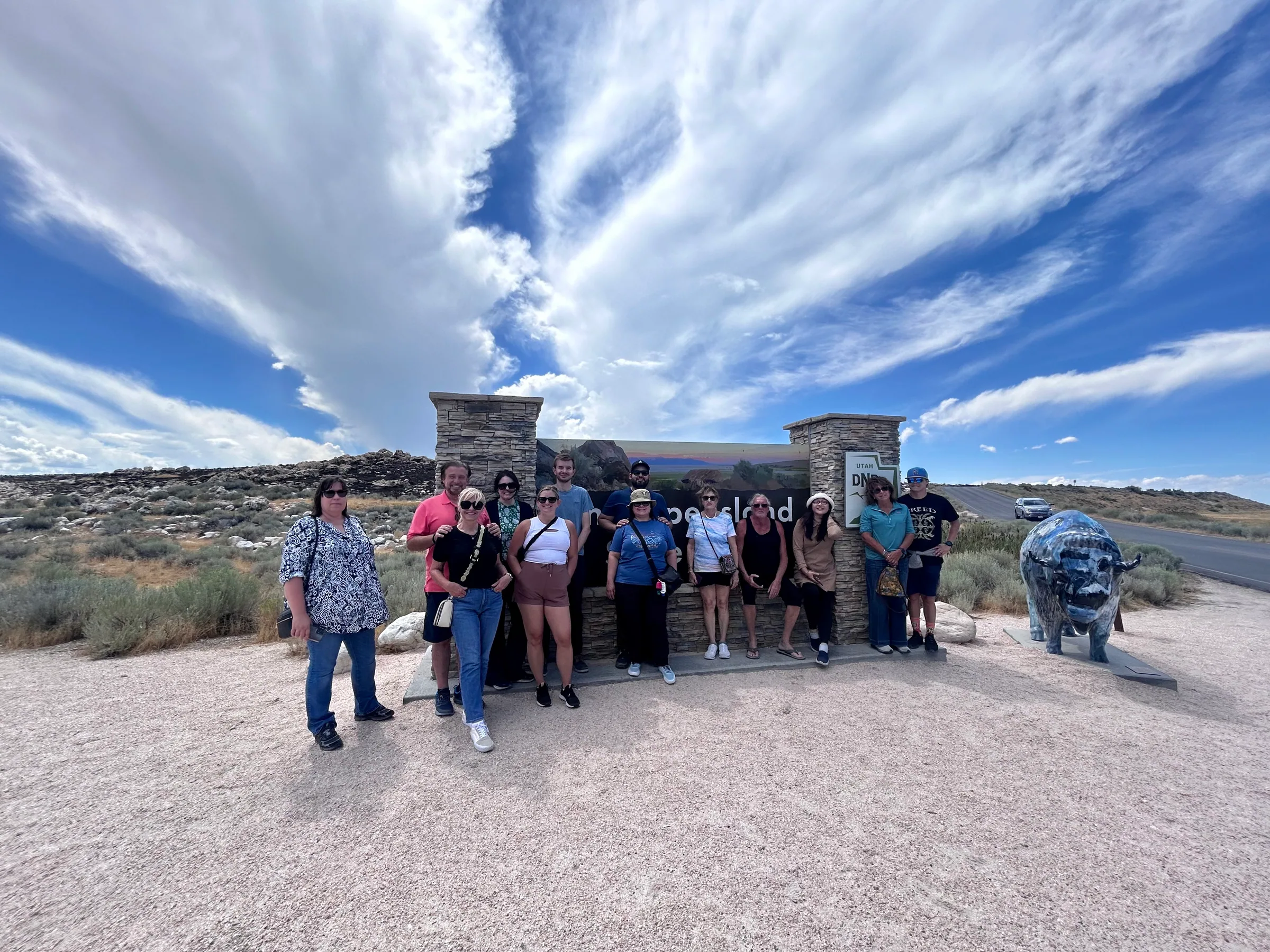
The recommended day. Morning: Antelope Island and the Great Salt Lake. Leave at 7:30, cross the seven-mile causeway, work down the island among a free-ranging bison herd to the 1848 Fielding Garr Ranch, and be back downtown by 1:30. Afternoon: eat, then walk Temple Square and City Creek on your own. Evening: dinner on Main Street or in the 9th and 9th neighborhood.
The alternative if you want the photograph. The Bonneville Salt Flats, 7:30 to 1:30. Thirty thousand acres of white salt, the fastest place on earth, and a landscape that doesn’t read as terrestrial. It costs you more road time, about three hours of the six, and it’s still the thing people talk about years later.
The alternative if you want variety. Park City and the Olympic venues, 8:30 to 4:30. Working ski jumps, a preserved silver-mining Main Street, mountain scenery, and two hours to yourself in the middle. This is the best pick for a mixed group where not everybody wants the same day.
And the one that costs you nothing but an evening. If your day is already spoken for, the Antelope Island Dark Sky Experience runs from 8:00 PM and gets you the Milky Way over a saltwater lake in four and a half hours. It stacks on top of a full working day.
If you’re staying in the city: a walkable day
Sometimes the day is fixed downtown: a conference, a stopover, no car. This works, and it works well.
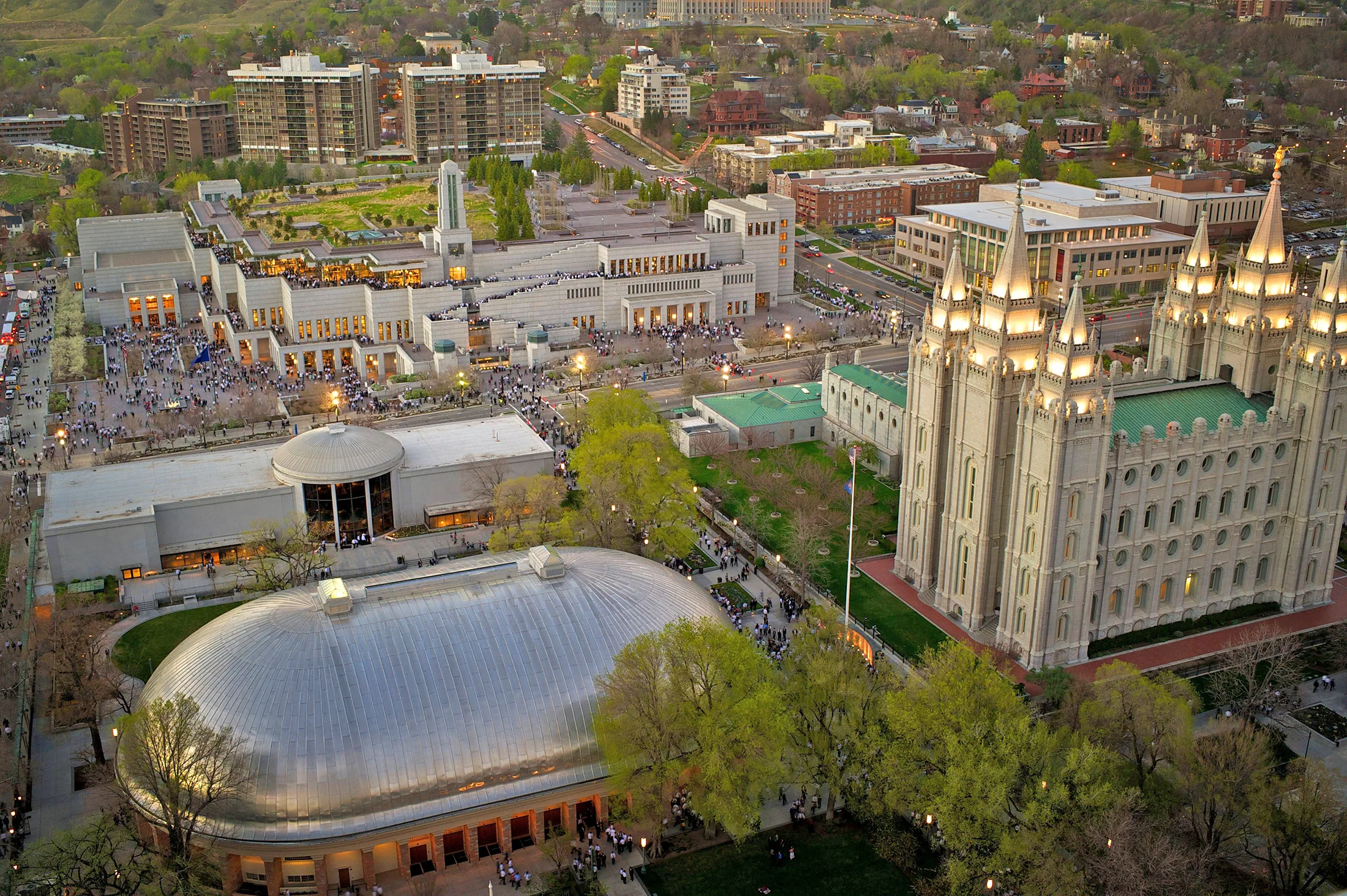
9:00 AM: Temple Square. Ten acres at the origin of the grid. The Salt Lake Temple itself is closed for a major seismic renovation and isn’t open to the public in any case, but the Tabernacle, the Assembly Hall and the grounds are, and the Conference Center across the street seats 21,000 people and is worth walking into for the scale alone.
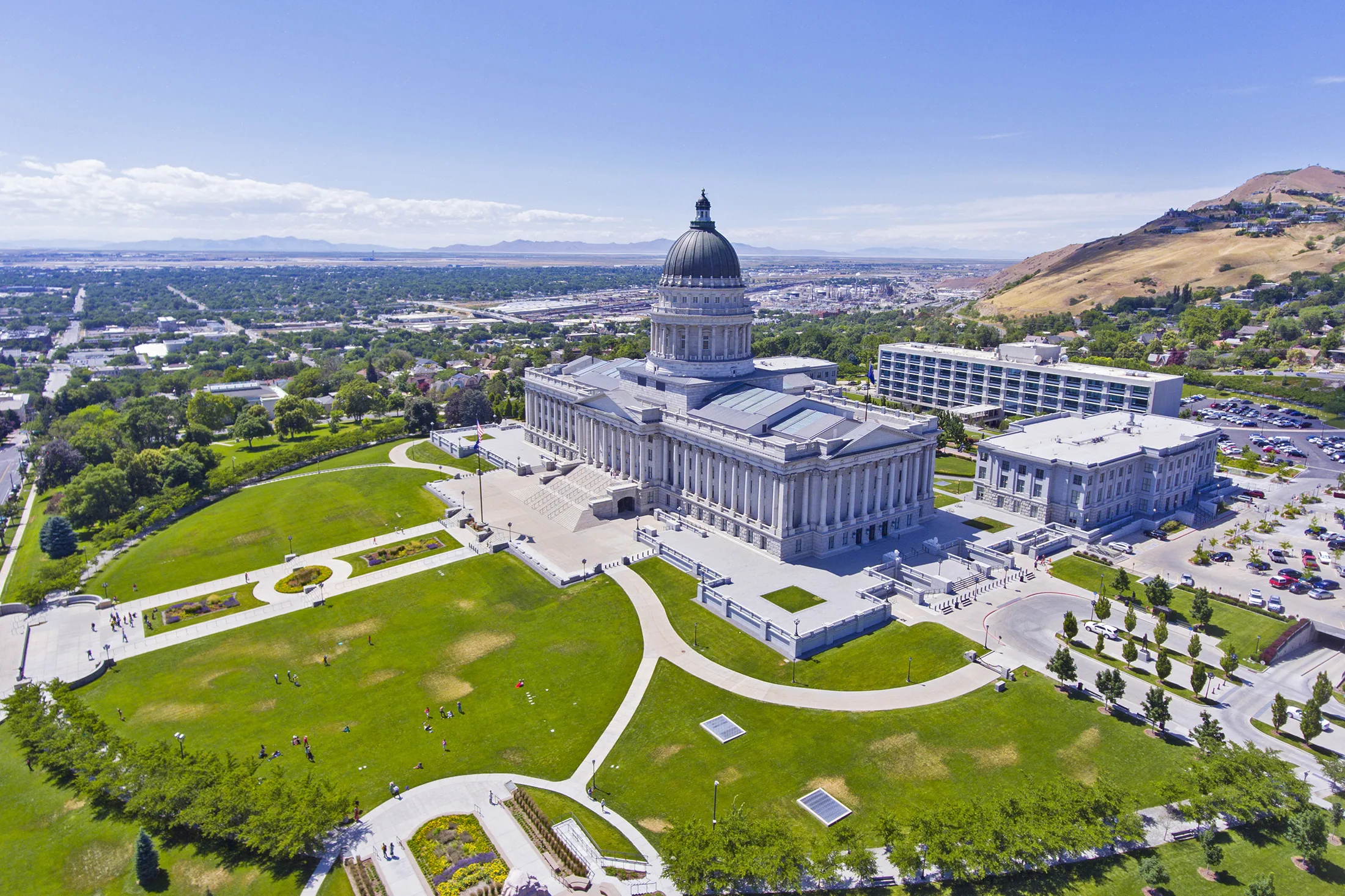
10:30 AM: the Utah State Capitol. Twenty minutes uphill on foot from Temple Square, or five in a car. A 1916 Renaissance Revival building on the bench, and the best free view in the city: the whole grid below you, the Oquirrhs behind it, and the Great Salt Lake beyond on a clear day.
12:30 PM: lunch downtown, then City Creek, where the stream the pioneers settled beside runs through an open-air shopping center. Odd to look at, and it takes ten minutes.
2:00 PM: the Natural History Museum of Utah. Fifteen minutes east, up on the foothills at the Rio Tinto Center. Utah is one of the great fossil states and the Cretaceous material here, much of it collected from the Grand Staircase, is world class. Give it two hours minimum.
5:00 PM: Pioneer Park or the 9th and 9th district for the evening. On a Saturday from June to October, Pioneer Park holds the Downtown Farmers Market, which is the best hour in the city.
If you’d rather have this narrated, the Salt Lake City Walking Tour covers the first half at $44, and the Highlights Driving Tour covers the whole valley including the Capitol and the university in three hours at $59.
If the weather has beaten you
Two conditions make an outdoor day in Salt Lake City hard work, and both are seasonal and predictable. The answer to each is the same: go up.
Deep winter. January and February on the valley floor are cold and flat-lit, and a rental car in fresh snow is nobody’s idea of a holiday. Drive to the Capitol, or up a canyon, or to Park City at 7,000 feet, and you get low winter sun, snow on the peaks and the whole valley laid out below you. It is one of the more memorable things you can see here.
High summer. Upper 90s and no humidity. Snowbird is fifteen degrees cooler at the top of the tram, and Park City is a different climate from downtown.
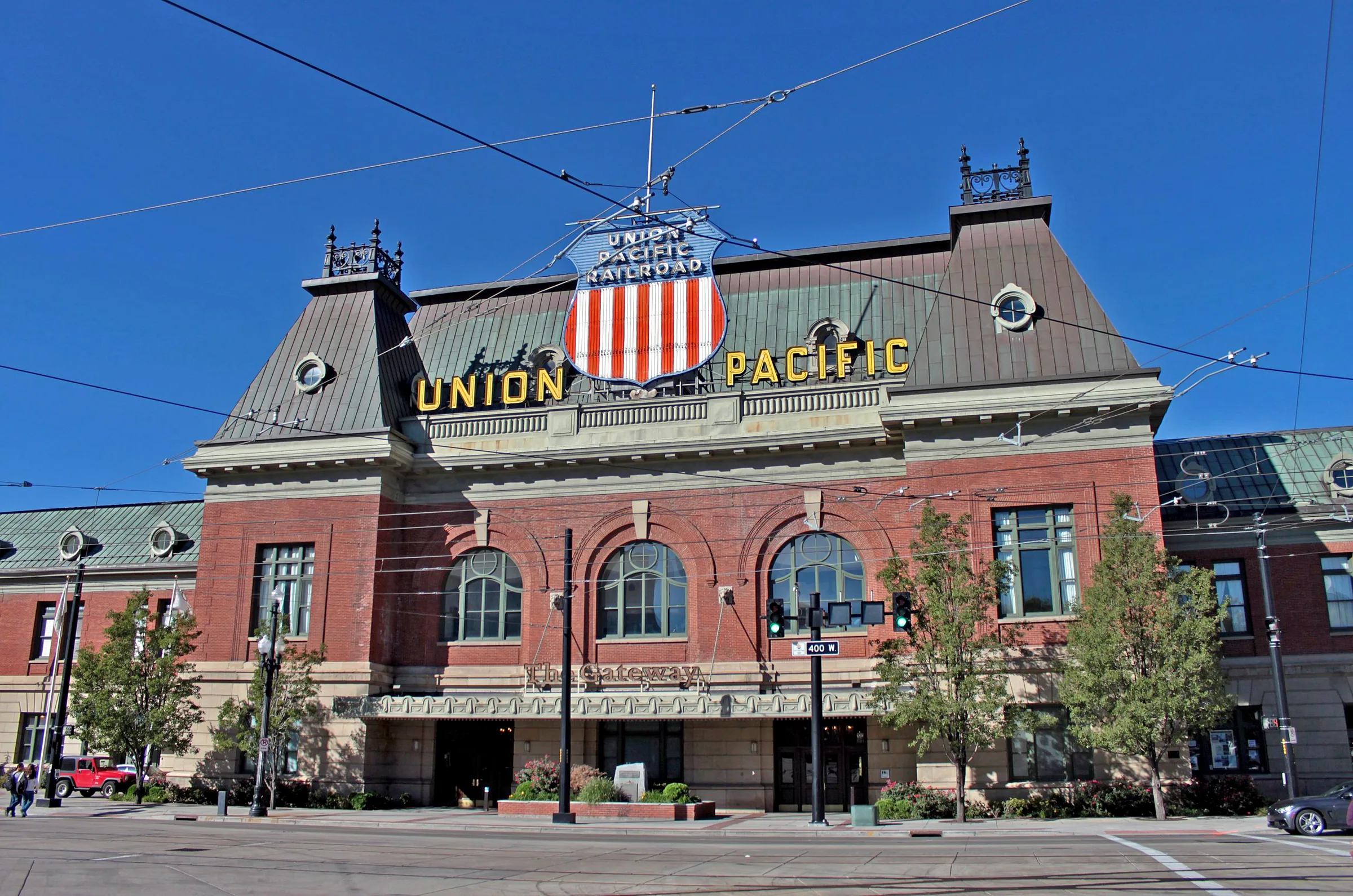
When neither works, the Salt Lake City Museum Tour is the deliberate indoor day: the Union Pacific Depot, the Cathedral of the Madeleine and three hours at the Natural History Museum, all climate controlled, for $89.
What to skip
Do not try to do a national park in your one day unless you have no other option. Bryce and Arches are both possible as thirteen-hour private days and we run them, but they’re seven to eight hours of driving. If you have two days, spend them in southern Utah properly. We say this on the Bryce and Arches pages too.
Do not plan to swim in the Great Salt Lake on a tight schedule. It is a real thing people do, but the salt needs a freshwater rinse afterwards and the access points that have one aren’t close to the tour routes. Look at the lake; float in it another trip.
Do not underestimate the altitude. Downtown is at 4,226 feet and the mountains go to 11,000. If you flew in this morning, you’ll feel it on stairs, you’ll dehydrate faster than usual, and alcohol will hit harder. Drink more water than you want to.
Do not rely on a rental car for the canyons in winter. Little and Big Cottonwood have traction-law restrictions that are enforced, and cars get turned around at the mouth. A tour vehicle is equipped for it; a rented sedan on all-seasons often isn’t.
Practicalities worth knowing
The airport is ten minutes from downtown, which is unusual for a US city and means a morning tour and an evening flight is workable.
TRAX, the light rail, runs through the city center and is free within the downtown Free Fare Zone. It also runs to the airport. You don’t need a car for a downtown day.
Alcohol laws are less strange than the reputation but not identical to elsewhere: full-strength beer, wine and spirits are sold in state liquor stores rather than supermarkets, and restaurants and bars serve normally.
Sunday is quieter than in most American cities. Some businesses close and downtown is noticeably calm. Plan a Sunday around a tour or the outdoors rather than shopping.
Tipping works as it does everywhere else in the US. Guide gratuities aren’t included in tour prices.
Common questions
Is one day enough for Salt Lake City?
One day is enough to see downtown Salt Lake City properly, and it’s enough to do one substantial thing outside it: Antelope Island, the Bonneville Salt Flats or Park City. It isn’t enough to do both well, and it’s not enough for a southern Utah national park, which is a seven-to-eight-hour round trip. Pick one and do it fully.
What is the best thing to do in Salt Lake City in one day?
If the weather is reasonable and you’ve never been to Utah, spend the day on Antelope Island and the Great Salt Lake: a free-ranging bison herd on an island in a hypersaline inland sea, 45 minutes from downtown. If you want the more unusual landscape, the Bonneville Salt Flats. If you want variety in a mixed group, Park City and the Olympic venues.
Do I need a car in Salt Lake City?
Not for a downtown day. TRAX light rail runs through the city center, is free within the downtown Free Fare Zone, and connects to the airport, which is only ten minutes away. You do need transport to reach Antelope Island, the salt flats or the canyons, which is what a guided tour with hotel pickup solves.
How walkable is downtown Salt Lake City?
Very, with one caveat: the blocks are 660 feet on a side, so distances that look short on a map take longer than you expect. Temple Square to the Capitol is about twenty minutes uphill. Everything in the central downtown is within a comfortable walk if you allow for the block size.
Is Salt Lake City worth visiting in winter?
Yes, and not only for the skiing. The Hardware Ranch elk sleigh ride runs mid-December to early March, Antelope Island has its clearest night skies of the year, and Temple Square puts on a large Christmas light display in December. Gain some altitude while you are here: the Capitol, a canyon or Park City will give you the best views of the valley you will get all year.